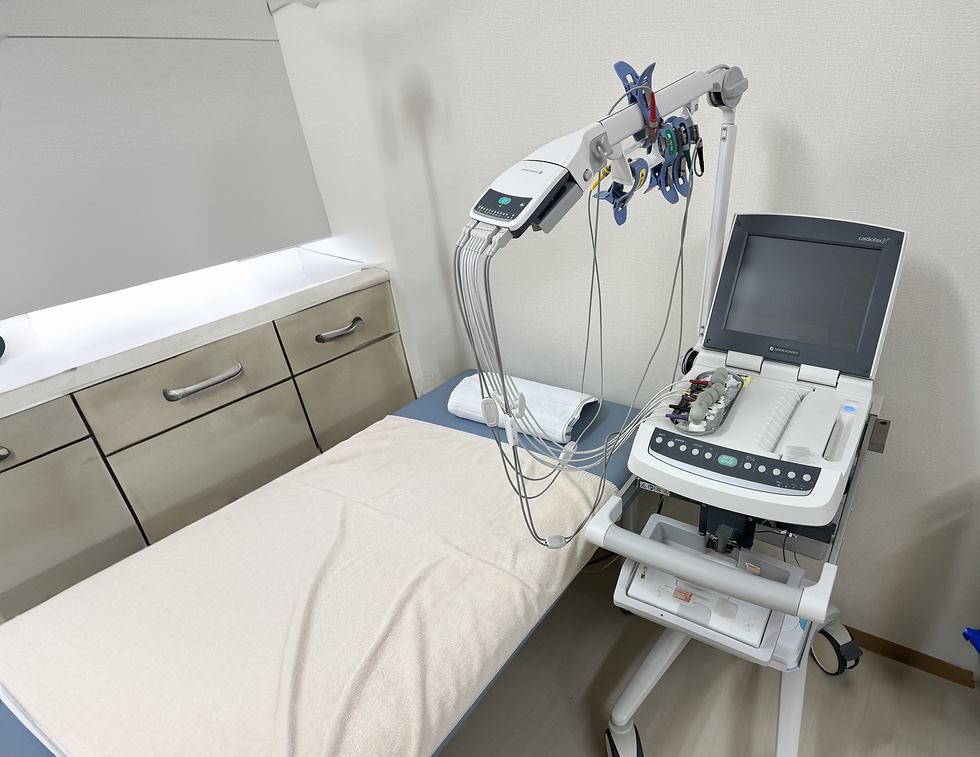
Easily check your health using an electrocardiogram to see if you are prone to atrial fibrillation (Af), sleep apnea syndrome (SAS), and obstructive sleep apnea (OSA).
By comparing blood pressure in the hands and feet and examining how pulse waves are transmitted, we can determine the age of blood vessels by measuring arteriosclerosis, and can also determine the risk of cerebral infarction and myocardial infarction.
A small, portable cardiograph is used to record electrocardiograms over a long period of time (24 hours) to examine the movement (beats) of the heart during everyday life.
A set of tumor markers for the entire body, including the esophagus, lungs, stomach, gallbladder, pancreas, large intestine, bladder, kidneys, liver cells, testicles, breast cancer, ovaries, and uterus.
When cancer develops in the body, a special substance may abnormally increase in the blood and serve as a marker for a tumor. This is a simple kit that indicates the possibility of cancer.
In addition to high-sensitivity CRP, heart failure markers, and cardiac troponin, this set includes cutting-edge blood markers that cannot be covered by insurance. A set of 30 items (21 items in 2021) carefully selected by our hospital's doctors.
We apply ultrasound to the blood vessels in the neck to check for arteriosclerosis. We diagnose the presence or absence of risk factors for myocardial infarction and cerebral infarction.
CT scans are used to check the risk of emphysema, chronic bronchitis, chronic asthma, pneumonia, and lung cancer. Recommended for current and former smokers.
Body Fat (Visceral and Subcutaneous Fat Measurements)
CT scans accurately measure visceral fat, which cannot be measured by general medical examinations. Metapo checks are also recommended for thin people.
Stereoscopic 3D imaging of the thoracic and abdominal aorta allows for early detection of aortic aneurysms and aortic dissections, which can be life-threatening if they rupture.
We use AI (artificial intelligence) to measure brain atrophy and the health of cerebrovascular disease, and analyze age-related changes in the brain and risk management.